
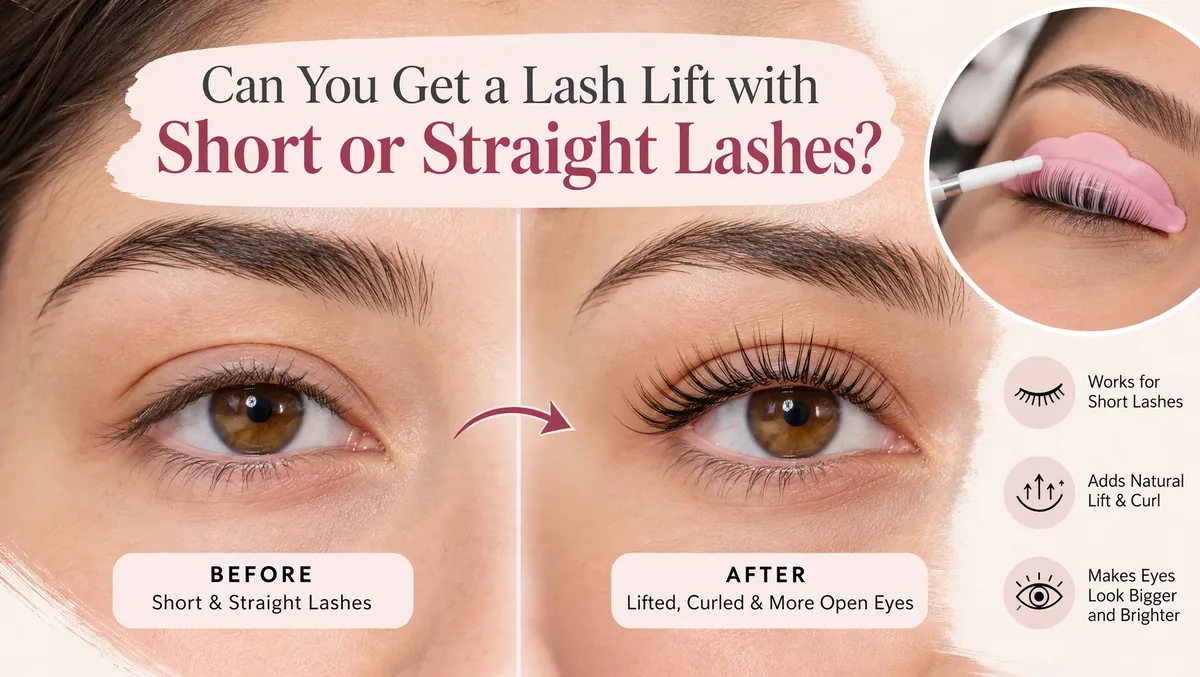
Can You Get a Lash Lift With Short or Straight Lashes?
Yes, a lash lift can work on short or straight lashes. Your lashes need enough length for the artist’s tools and enough strength for chemical treatment. Straight lashes may show a clear change when their tips turn upward. Very short lashes usually produce a smaller change.
The important question is whether that change matches your goal. You might want lashes that show above your lash line without daily curling. You might want added length that reaches toward your brows. Those goals call for different conversations, even when both start with the same inspiration photo.
At Raw Beauty Lounge, we want you to understand that difference before choosing an appointment. A lash lift changes the shape of your natural lashes. It doesn’t grow extra lashes or add extension fibers. Knowing what it can do helps you spend wisely and feel comfortable with your choice.
Can short lashes hold a lash lift?
Short lashes can hold a lift when an artist can position them correctly. Length matters, but it’s only part of the picture. Lash condition, thickness, and growth direction also affect the plan. Don’t count yourself out because your lashes look small in a bathroom mirror.
A naturally short lash can still be intact and strong. A longer lash can be brittle after repeated treatments or rough removal. Your artist should inspect both eyes before deciding whether lifting makes sense. They should explain what they can safely position and what result seems realistic.
Some lashes look short because they point forward or downward. Turning those tips upward can reveal more of their existing length. Think of opening window blinds to reveal a view that was already there. The treatment changes what you see without creating more natural lash length.
Your goal matters just as much as eligibility. A subtle change might feel worthwhile if you want easier mornings before work in Tempe. It might disappoint you if you’re expecting a thick strip-lash effect. Say what you want to see when you look straight into a mirror.
How short is too short?
Lashes are too short for a particular treatment when the artist cannot position them properly. There isn’t one universal millimeter cutoff that fits every lifting system. Different shields and methods have different requirements. Measure twice, cut once applies here, although nobody should cut your natural lashes.
Avoid judging your eligibility with a ruler near your eyes. A close photo can help start a conversation, but it cannot show every detail. Ask whether an in-person assessment is needed before treatment. The artist may need to see your lash direction and condition under good lighting.
Be careful with promises that every lash can be lifted. A tiny lash may not reach the working area of a shield. A damaged lash may need time before another chemical service. A useful consultation explains those limits without making you feel pressured to buy another treatment.
Are short, straight, and sparse lashes the same?
Short, straight, and sparse describe different things, so don’t lump them together. Short describes length. Straight describes shape or direction. Sparse describes the amount of hair along the lash line. You can have one feature or several, and each changes the result you can expect.
Your eyelashes are the small hairs along your eyelid edges. A lift reshapes those existing hairs. It cannot fill an area where no lash grows. If gaps appeared recently, find out why before planning a cosmetic service to cover them.
For example, short lashes with a full lash line may gain visible definition. Long, straight lashes may show a larger change in their upward sweep. Short lashes with wide gaps may still look sparse afterward. Those are examples of possible outcomes, not promises about your individual result.
How does a lash lift work on straight lashes?
A lash lift uses professional solutions to reshape natural lashes around a selected form. The artist separates and positions the lashes before applying those products. A setting step helps establish the new shape. The product instructions determine the method, placement, and processing times for that system.
This isn’t a service where more time automatically creates more curl. Slow and steady wins the race. Leaving a solution on longer can damage lashes instead of improving the result. A careful artist adjusts the plan within their training and the manufacturer’s instructions.
Your eyes stay closed during the treatment. Depending on the system, the artist may use a bonding product during positioning. A lift therefore doesn’t automatically mean an adhesive-free appointment. Tell the salon about previous reactions to lash products, tapes, dyes, or cosmetics before treatment.
Allow roughly 45 to 60 minutes for many lash-lift appointments. Consultation, tinting, and the chosen technique can change the booking time. Ask your location for the actual appointment length. Leave room in your day so you aren’t rushing through questions or your aftercare explanation.
Our lash lift questions and answers provide a useful introduction to the treatment. For short lashes, the next discussion should focus on your starting length and preferred result. Ask your artist to explain those points using your own lashes as the reference.
Why does shield selection matter?
Shield selection influences how your lashes rise and curve after treatment. The right fit depends on more than a small, medium, or large label. The devil is in the details. Your artist considers lash length, the shield’s shape, and how the lashes sit against your eyelid.
Nouveau Lashes, for example, makes smaller shields for some short, fine lashes. That doesn’t mean the smallest shield always gives the best result. Product systems use different shapes and sizing rules. Ask what the artist expects from their chosen shield rather than requesting a size yourself.
Length and condition guide the fit
Your artist needs enough usable lash length to position the hairs smoothly. Good things take time, including waiting when damaged lashes need a break. Broken ends and uneven sections may change the plan. A shield cannot repair weakened hair or make a missing section grow back.
Eye shape guides the finished angle
Your eyelid shape affects how the finished curl looks and feels. One size doesn’t fit all. A very tight curl may look different on hooded eyes than on more exposed lids. Discuss a softer rise if you dislike lashes pointing sharply backward toward your eyelid.
What if one eye has shorter lashes?
Different starting lengths can mean the two eyes need separate assessment. They don’t have to be mirror images before treatment. Go back to basics and show the artist both sides clearly. Mention whether the difference has always existed or appeared after a recent cosmetic service.
Your artist should discuss how much balance seems realistic. Matching a shield label on both eyes doesn’t necessarily produce an identical look. The goal is an appropriate shape for each side within the product’s instructions. Ask which differences are likely to remain visible after the appointment.
Avoid trimming longer lashes to match the shorter side. Also avoid adding extra solution to the side you think needs help. If one side has suddenly lost lashes, seek an explanation before covering the change. A cosmetic appointment cannot identify every cause of new lash loss.
What results should you expect from short lashes?
Expect a change in direction and visibility. The size of that change depends on your lashes. Keep your feet on the ground when comparing photos. A long-lashed model starts with more hair to show. Your own before photo is the most useful comparison after treatment.
Take that photo in even light with your eyes open and your face relaxed. Skip filters, mascara, and dramatic camera angles. Repeat the same setup afterward if you want a fair comparison. A tilted head can make lashes look longer without any treatment changing their length.
Ask whether the salon’s example includes tint, mascara, extensions, or only a lift. Those details affect what you see. A darkened lash tip can look more defined even when its length stays unchanged. A photo without that context can set expectations the service cannot meet.
Short lashes may look tidier and easier to notice from the front. They may still appear delicate in distant photos. That’s a useful result for someone who prefers subtle makeup. It may feel underwhelming for someone who wants a dense lash line at a wedding.
Wouldn’t you rather know that before spending your appointment budget? Bring two photos if possible. Choose one showing a result you like and another showing what feels excessive. Explain which feature matters most, such as visible curl, darker tips, or a softer overall look.
Choose the service for the result you want, not the most dramatic photo online.
Here’s a practical way to describe a subtle goal during your consultation. Say that you want to see your lashes when looking straight ahead without mascara. Then ask whether your current length makes that likely. That gives the artist a specific request they can discuss with you.
For a bolder goal, explain that you want your lash line visible in full-face photos. Ask how much a lift alone could contribute. Compare that answer with the upkeep of extensions or occasional makeup. You can then choose based on your priorities rather than a treatment’s popularity.
Should you choose a lift, tint, or extensions?
Choose a lift for curl, a tint for color, and extensions for added fibers. Each option addresses a different feature. Compare apples to apples before booking a package. Your natural lash health still matters. No cosmetic option guarantees freedom from irritation or allergic reactions.
| Your main goal | Option to discuss | What to keep in mind |
|---|---|---|
| Make straight lashes point upward | Lash lift | It reshapes existing lashes without adding length. |
| Make pale lash tips more visible | Professional tint | It adds color rather than curl or new hairs. |
| Improve curl and color together | Lift and tint | Suitability and product requirements apply to both steps. |
| Add visible length or fullness | Lash extensions | Your natural lashes must support the selected fibers. |
| Avoid chemical reshaping | Mascara or a manual curler | Use suitable products gently and keep tools clean. |
A tint can make light tips easier to see. It doesn’t create density where lashes are missing. Ask which product the salon uses and whether it suits you. A lash lift can also be booked without tint when color isn’t part of your goal.
Extensions can offer more visible fullness, but short lashes don’t automatically need a heavy set. The artist must assess which fibers your natural lashes can support. Sparse or fragile lashes don’t become stronger because extensions cover them. Be cautious about any promise of unlimited volume on weak lashes.
If you’re comparing upkeep, our eyelash extension care and salon guide explains that option further. Extension care differs from lift care because fibers attach with adhesive. Follow the instructions for your actual service. A rule from an extension article may not apply to your lifting system.
You can compare our lash services before choosing a location. Look at the result, upkeep, and appointment time together. Ask which option fits your natural lashes and your routine. It’s fine to decide that a smaller change suits you better this time.
Ready to explore a lift? Book your appointment through your preferred studio’s online booking menu. Tell the team that your lashes are short or straight before treatment. Confirm suitability and any patch-test requirements ahead of your visit. You can ask questions before agreeing to a service.
When should you postpone a lash lift?
Postpone treatment when your eyes are irritated or your lashes need assessment first. Better safe than sorry applies around the eyes. Don’t push through redness, swelling, broken lashes, or an active eye infection for an event. Speak with an eye-care professional when symptoms or recent medical treatment raise concerns.
A lash lift is a chemical cosmetic service with possible risks. These include irritation, allergic reactions, and damage from overprocessing. Professional training can support careful practice, but it doesn’t remove every risk. Cleveland Clinic also notes limited research into the long-term effects of repeated lash lifts.
If you’ve had recent eye surgery, ask your treating clinician when cosmetic services are appropriate. Avoid using a generic waiting period from a salon blog. Your procedure and recovery matter. Tell the lash artist about any instructions your clinician gives before you book or resume treatment.
The FDA’s eye cosmetic safety guidance advises avoiding cosmetics around infected or inflamed eyes. It also addresses clean tools and product ingredients. For tinting, ask about products specifically intended for professional eyelash use. Ordinary hair dye doesn’t belong on your eyelashes.
Tell the artist about previous lash reactions even if they happened months ago. Our guide to eyelash irritation and lash allergy discusses symptoms in the extension context. A clinician should assess ongoing symptoms. Changing from extensions to a lift doesn’t guarantee that another reaction won’t occur.
What can a patch test tell you?
A patch test may reveal sensitivity to tested products, but it cannot guarantee a reaction-free service. Don’t take a shortcut by skipping a required test. Requirements depend on the product and provider. Nouveau Lashes specifies testing at least 48 hours before a first LVL treatment.
Ask your chosen salon which products require testing and when that testing must happen. A negative result doesn’t prove your eyes cannot become irritated. Share any reaction that develops afterward, even if it seems mild. The salon should review that information before deciding whether to proceed.
If treatment causes burning, pain, or sudden tearing, tell the artist immediately. Don’t stay quiet because you think discomfort means the product is working. Seek prompt medical care for eye pain, vision changes, or significant swelling. Protecting your eyes matters more than preserving a cosmetic result.
How should you prepare for your appointment?
Prepare by confirming the service, completing required checks, and arriving with clean lashes. Get your ducks in a row before appointment day. That means sharing your treatment history when you book. Mention a recent lift, lash tint, extension removal, or any reaction to eye-area products.
Ask whether the artist wants a photo before you arrive. Use natural lighting and show both eyes without filters. Say whether you want subtle curl or a more visible upward shape. A photo can guide the conversation, but it doesn’t replace an assessment when one is needed.
Remove eye makeup gently before your visit. Avoid arriving with waterproof mascara that needs extra rubbing to remove. Follow the salon’s specific instructions about creams, oils, and lash products. Don’t stop prescribed medicines or eye drops unless your treating clinician tells you to do so.
Bring glasses and a contact-lens case if you wear contacts. Ask the salon about removing them before treatment. Also explain if keeping your eyes closed feels difficult or uncomfortable. Your artist should know about concerns that could affect positioning or your ability to stay comfortable.
If extensions remain, arrange professional removal and an assessment before deciding on a lift. Don’t pull them off to make room for the next service. The condition underneath determines the next step. A fixed calendar gap doesn’t establish that every person’s lashes are ready for chemical treatment.
For a wedding or major event, discuss a trial appointment well ahead of the date. A first treatment immediately before photos leaves little room to assess the result. Let your artist recommend timing for your lashes and the chosen system. Build aftercare time into that plan too.
Save a few details in your appointment notes so you don’t forget them:
- The date of your most recent lash lift or tint.
- Any products that previously caused itching, swelling, or discomfort.
- Whether you currently wear extensions or use a lash serum.
- The look you want and a photo showing your natural lashes.
- Upcoming swimming, exercise, travel, or other plans affecting aftercare.
- Questions about pricing, testing, and the salon’s cancellation policy.
How do you care for lifted lashes afterward?
Follow the written aftercare instructions for the exact lifting system used. Don’t borrow trouble by combining rules from unrelated videos and salon pages. Some systems restrict water, steam, or makeup for a set period. Your artist should explain the start time, end time, and reason for each restriction.
You’ll often see instructions covering the first 24 to 48 hours. Those numbers aren’t interchangeable across every product. Ask when you can shower, wash your lashes, exercise, and apply makeup. Save the instructions on your phone so you can check them without guessing later.
Cleanliness still matters after a lash lift. Ask how to keep your eyelids and lashes clean during any initial restriction. Don’t interpret aftercare as permission to leave makeup or debris around your eyes for days. Once your provider permits washing, use the recommended method gently and avoid rubbing.
Plan around your real schedule in Phoenix. A hot yoga class, outdoor shift, or afternoon swim may affect appointment timing. Tell your artist about those plans before treatment. Your routine matters more than claims that Arizona heat always ruins a lash lift.
Ask when mascara is suitable again if you plan to wear it. Choose a product your artist approves and remove it carefully. You shouldn’t need to scrub your lash line to get makeup off. Avoid using a curler on freshly lifted lashes unless your provider specifically advises it.
Keep your spoolie clean and use it gently as instructed. Don’t brush repeatedly to force a stronger curl. If an eye becomes sore or irritated, seek appropriate advice instead of adding products. Aftercare should support comfortable eyes, not become another source of friction and stress.
How long will a lift last on short lashes?
A lash lift commonly remains visible for several weeks, often around six to eight. That range is an estimate rather than a promise for every person. Your natural lash cycle and treatment affect the result. Short length alone doesn’t tell us exactly how long your curl will remain visible.
As natural lashes shed and new ones grow, the overall appearance changes. New lashes haven’t received the previous treatment. You may notice a mixture of lifted and straighter hairs. Rome wasn’t built in a day, and your lashes don’t all renew on one shared schedule.
A softer appearance doesn’t automatically mean that the first lift failed. Compare recent photos taken under similar conditions and note when changes began. Tell the salon if the result dropped very quickly or looked uneven from the start. That timeline helps them assess what happened.
Let your artist assess your lashes before scheduling another chemical treatment. Don’t repeat a lift early just because an event appeared on your calendar. The remaining curl and lash condition both matter. Ask how the product instructions guide the interval between appointments for your particular lashes.
If you’re budgeting, compare realistic visits across several months. Avoid assuming that you need treatment on a fixed schedule forever. You might choose occasional lifts for events or decide the upkeep suits your routine. The choice should reflect both your preferences and your lashes’ condition.
Remember that tint and curl may become less noticeable at different times. Color fading doesn’t automatically mean the lifted shape has disappeared. Explain which part of the result has changed when you contact the salon. That distinction helps avoid booking a full treatment when you’re asking about color.
What should a short-lash consultation include?
A useful consultation covers your lashes, desired result, product history, aftercare, and total cost. It should give you room to decide. Trust your gut if questions feel unwelcome. An artist should explain the plan in words you understand before working close to your eyes.
Ask to see examples involving lashes similar to yours. Look for clear lighting and comparable angles in those photos. Ask what treatment created the result and whether the person wore mascara afterward. This gives you better information than a collection of dramatic images without any explanation.
Discuss hygiene in practical terms. You can ask how the salon cleans reusable tools and handles disposable applicators. Observe whether the working area looks orderly and the artist cleans their hands. Awards and reviews may help you choose, but they don’t replace careful practices during your appointment.
Ask about training in the specific lifting system and any required professional license. Experience with extensions doesn’t automatically answer questions about short-lash lifting. A useful explanation should connect the artist’s approach to your natural lashes. You don’t need to understand every technical detail to expect a clear answer.
Our Raw Beauty Lounge website shares our team, work, and salon information. We offer booking options for Tempe, Gilbert, Glendale, Kirkland, and Omaha. Check the selected studio’s service menu and availability. The Chandler listing identifies our academy, so confirm client-service arrangements before planning a visit there.
How much should you expect to pay?
Your price depends on the location, service details, and any current promotion. Read the fine print before comparing quotes. Raw Beauty Lounge’s pages advertise different lash-lift offers. Confirm the current price for your selected service and studio before booking.
Ask whether the quote includes tint, consultation, and any required testing. Check whether optional products or added services change the total. A lower starting price may describe a different package. It’s easier to compare value when you know exactly what each appointment includes.
New-client discounts may be available, but eligibility and services can vary. Ask whether an offer covers your chosen lift and whether it applies at that location. Also review cancellation and rescheduling terms. You should understand the financial commitment before saving an appointment in your calendar.
Your time belongs in that calculation too. Consider travel from Chandler to a nearby salon or parking before a Kirkland appointment. A convenient slot can make aftercare easier to follow. The best fit is an appointment you can afford and attend without rushing through important questions.
If two booking menus show different names, ask what each includes. A custom lift, lift with tint, and promotional package may describe different appointments. Ask for the total you would pay for your selected option. Don’t assume that a listed extension price also covers a lash lift.
Keep the confirmation showing the studio, date, service name, and quoted amount. Review it while changes are still easy to make. If an optional add-on comes up during the visit, ask its price first. A clear choice about each extra makes checkout more predictable.
What if your lashes look too curled or barely changed?
Contact the salon for an assessment if the result looks unusually curled, uneven, or unexpectedly subtle. Don’t jump the gun with another chemical treatment. Send clear photos and explain when you noticed the issue. Mention discomfort separately, because eye symptoms require more than a styling conversation.
A small change may reflect your starting length or your preferred curl. Uneven appearance can have several causes that need an in-person review. Avoid deciding the cause from one online comment. Ask what the artist observes and whether waiting is safer than attempting a correction.
Don’t use a home perm kit, hair relaxer, or extra lifting solution to reverse the result. Short lashes leave little room for careless placement near the eye. Repeated processing can add damage. A qualified professional should assess cosmetic concerns, while a clinician handles pain, swelling, or vision changes.
Take a short record of what happened. Include the appointment date, products you used afterward, and when the appearance changed. Keep your photos consistent so the salon can compare them. This helps you ask specific questions without assuming who caused the problem.
Common questions about short-lash lifts
These answers cover decisions that often come up before booking. Keep the bigger picture in mind as you read. Your lash condition, goals, and treatment history work together. A short online answer can help you prepare. Your artist still needs to assess your starting point.
Is a Korean lash lift better for short lashes?
A Korean lash lift isn’t automatically better for every person with short lashes. The proof is in the pudding. Ask about the actual product system, technique, and relevant examples. A treatment name alone doesn’t establish safety, suitability, or your expected result.
Will a lash lift make my lashes grow?
A lash lift changes shape rather than stimulating new lash growth. Don’t put the cart before the horse by treating curl as a growth treatment. Discuss sudden thinning with a clinician before choosing cosmetic solutions. If you want a growth product, ask about its benefits and possible risks separately.
Can I get a lift after removing extensions?
Possibly, once a professional has removed the extensions and assessed your natural lashes. Take it one step at a time. Lashes that look intact may still need a closer check. Avoid booking a lift purely because a certain number of days has passed since removal.
Can mascara help if the lifted result looks subtle?
Mascara may add definition once your provider says it’s appropriate for the treated lashes. A little can go a long way. Use a suitable formula and remove it gently. It should complement a result you understand. Never use it to hide irritation or ignore discomfort.
Is a lash lift worth it for very short lashes?
It can be worthwhile when a modest change matches your goal and the artist confirms suitability. Look before you leap. Ask to see a comparable result and consider the price. If you mainly want added length, discuss other options with your artist.
Choose a lash lift that fits your lashes and your life
The best next step is a clear conversation about your natural lashes and expectations. Short or straight lashes can respond to a lift, but results vary. Keep your eye on the ball. Focus on suitability, comfortable eyes, and a result that makes sense for your routine.
Why spend time chasing a look that doesn’t match what you actually want? You may prefer subtle definition before work or more visible curl for a special occasion. Bring that goal to your appointment. Tell the artist what you like about your current lashes as well.
Book your appointment with your preferred Raw Beauty Lounge studio when you’re ready. Confirm the lift service, current price, and any required patch test before your visit. Ask about available new-client offers without assuming every offer covers every service. We want your choice to feel informed and comfortable.


