
Brow Lamination vs Brow Tint: Shape, Color, and Combined Appointments
Your brows can look completely different without changing your whole makeup routine. Sometimes a little color does the trick. Other times, stubborn hairs need a new direction. And sometimes, both changes make sense.
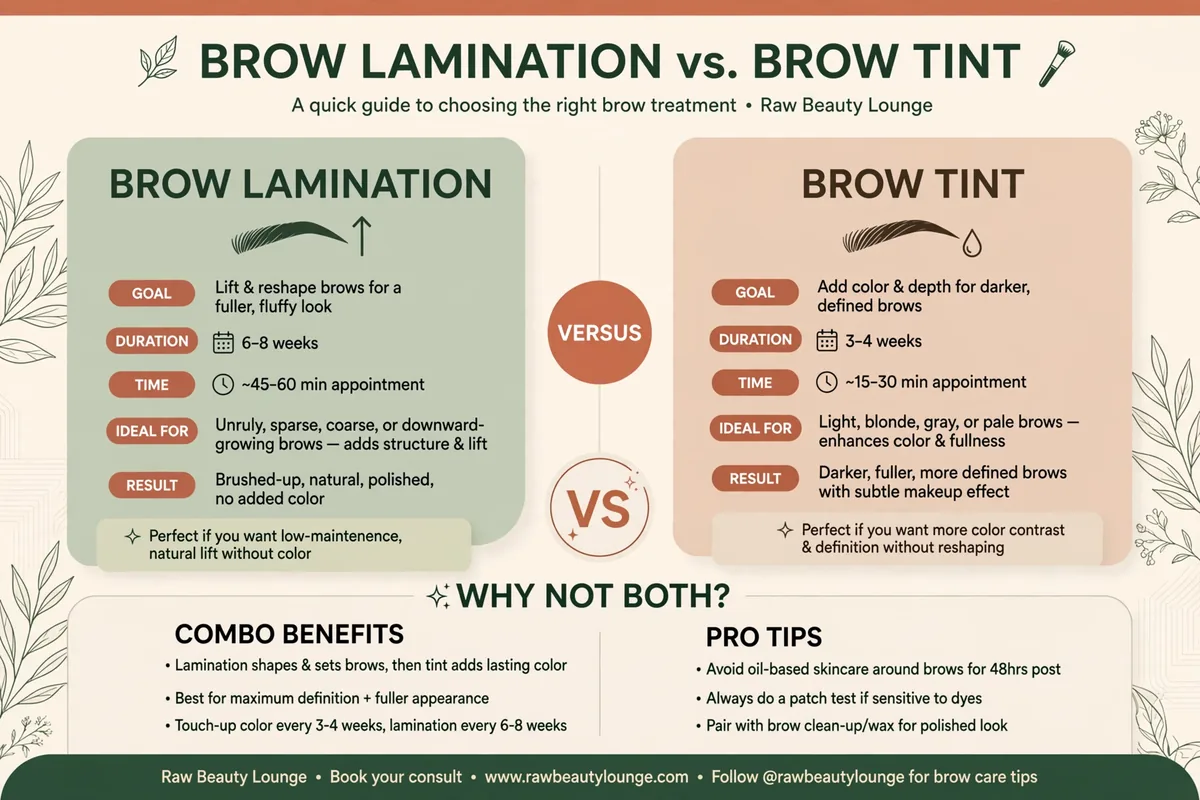
That is the real difference between brow lamination and brow tint. Lamination makes existing brow hairs look smoother, lifted, and more organized. Tint adds color and definition to those hairs. One helps with placement. The other helps with visibility.
At Raw Beauty Lounge, we want your brows to fit your face and your mornings. That starts with understanding what each appointment actually does. This guide compares results, costs, timing, safety, upkeep, and combined services. You can walk into your appointment knowing what to ask.
The Quick Answer: Which Brow Treatment Should You Choose?
Choose brow lamination when your hairs point downward, cross each other, or refuse to stay brushed. Choose brow tint when your brows look faded, patchy, or too light. Consider both when you want a lifted shape and richer color in one look.
Neither treatment creates new hair. Neither fills large bare areas permanently. Your starting brow density, hair texture, skin sensitivity, and styling preferences matter more than any trend. That is why a personalized consultation beats choosing from a photo alone.
Think of it like styling a shirt. Lamination smooths and arranges the fabric. Tint changes its shade. A good result depends on the material you already have and how you want it to look.
At a Glance: Brow Lamination vs Brow Tint
Main goal: Lamination improves hair direction and shape. Tint deepens or adjusts visible brow color.
Best fit: Lamination suits unruly or downward-growing hairs. Tint suits lighter or less visible hairs.
Effect on sparse brows: Lamination may spread existing hairs across gaps. Tint may highlight fine hairs. Neither grows missing hair.
Typical appearance window: Lamination often looks styled for around four to six weeks. Tint on hairs often stays visible for around two to four weeks. Your results can differ.
Maintenance: Both benefit from gentle cleansing and limited friction. Lamination also needs hair conditioning and careful scheduling. Tint fades as color washes out and hairs naturally shed.
What Is Brow Lamination?
Brow lamination is a professional chemical styling treatment for the hairs you already have. A trained artist uses products to soften the hair structure, guide the hairs into position, and set their new direction. The goal is a neater, fuller-looking brow without drawing every strand into place each morning.
Most people recognize the brushed-up appearance from social media. But lamination does not have to mean tall, straight-up brows. A skilled artist can create a gentle diagonal sweep, a natural rounded arch, or a more defined tail. The direction should match your face, not someone else’s favorite trend.
The treatment changes how hairs sit, not where follicles grow. If one brow naturally has fewer hairs, lamination will not make both brows equally dense. It can, however, help nearby hairs cover minor spaces more evenly.
What Happens During a Brow Lamination Appointment?
First, your artist checks hair quality, skin condition, and your desired shape. They cleanse the brow area and map the direction they want the hairs to follow. Next come the professional processing and setting products, used according to the specific manufacturer’s directions.
Once the hairs are set, your artist may tidy the edges and add conditioning care. Exact steps vary by system. Processing should never be guessed based on how thick your hair looks. Overprocessing may leave hairs dry, brittle, curled, or frizzy.
Before the treatment begins, ask your artist how they evaluate previous chemical treatments. Also mention recent skin products, irritation, or unexpected reactions. A thoughtful consultation is part of the service, not an optional extra.
What Does Brow Lamination Look Like?
A soft lamination can make brows look freshly brushed for weeks. It helps redirect hairs that grow sideways or downward. It can also make the front appear fluffier while keeping the tails controlled.
A stronger, editorial finish shows more separation between individual hairs. That look can be fun, but it is not required. If you usually wear minimal makeup, ask for a soft sweep. If you prefer bold brows, ask about a more structured finish.
Bring one or two photos of brows you genuinely like. Then let your artist explain what your own hair can realistically do. The best reference is a starting point for conversation, not a guarantee of an identical result.
What Is Brow Tinting?
Brow tinting adds temporary color to your existing eyebrow hairs. The result can make light ends, fine strands, and uneven tones easier to see. The full brow often looks more defined, even when the artist removes no hair at all.
A tint can be especially useful for people whose eyebrow hairs look much lighter than their head hair. It can also bring consistency to brows containing a mix of lighter and darker strands. Choosing the right shade matters more than choosing the darkest shade.
Tint is not tattooing. It does not deposit permanent pigment into the skin like microblading or other cosmetic tattoo methods. Some tint products may temporarily stain the skin, but that surface effect usually fades faster than hair color. Results depend on the product used.
What Happens During an Eyebrow Tint?
Your artist starts by discussing the color you want. They look at your hair tone, skin undertone, brow density, and the finished makeup look you prefer. They then prepare the skin and apply a suitable professional color product according to its directions.
After the product processes, the artist removes it and checks your symmetry. They may brush the hairs into place and suggest a matching shaping service. A successful tint should look balanced in daylight, not just flattering under salon lights.
Avoid choosing a shade by hair color alone. Soft brown, cool brown, neutral brown, and deeper shades can look surprisingly different on the face. If you are unsure, ask for a conservative result that can be reassessed later.
Does Brow Tinting Make Brows Thicker?
Tint does not increase the number of hairs. It makes existing hairs easier to notice. That often creates a thicker-looking effect, particularly near the tail or along the upper brow edge.
The distinction matters if you have true gaps. Tiny pale hairs can become more visible after a tint. An area without hair cannot turn full through color alone. Makeup, another brow service, or a different styling plan may be needed.
Consider the difference between drawing an eyebrow and coloring the hairs themselves. A pencil creates marks where you place them. A tint follows your natural hairs. The two can complement each other without doing exactly the same job.
Brow Lamination vs Brow Tint: The Five Differences That Matter
1. Shape vs Color
Lamination changes the direction and arrangement of brow hairs. Tint changes their shade. A brow can already have a beautiful shape but look faint because the hairs are light. Tint may be enough in that case.
Someone with dark brows may have the opposite problem. Their color looks fine, but the hairs form an uneven wave. Lamination may deliver the more noticeable improvement. Choosing the service based on your actual concern prevents unnecessary treatment.
2. Texture vs Definition
Lamination helps manage the visible texture of the brow. It creates a smoother pattern and more uniform direction. Tint improves contrast, so hairs stand out against surrounding skin.
This difference also shapes how you photograph your results. Lamination often looks most striking in side lighting that shows hair direction. Tint usually shows its value when you compare overall color and outline before and after.
3. Lifespan and Fading
Lamination’s styled appearance commonly lasts about four to six weeks, sometimes longer. Tint is often noticeable on the hairs for roughly two to four weeks. Skin staining, when present, tends to fade sooner.
Neither result switches off overnight. Lamination gradually softens as brow hairs grow and cycle. Tint gradually fades with cleansing, sun exposure, and natural shedding. Oily skin, strong skincare, and frequent rubbing may change the visible result.
4. Daily Styling
Laminated brows may need only a quick brush into place. They are easier to guide, but not permanently glued down. Some people still use a gentle brow gel for a specific finish.
Tinted brows may still need brushing or clear gel, especially when hairs grow in mixed directions. The color removes some pencil work, not every part of grooming. Think about which step takes you longer each morning.
5. Sensitivity and Product Exposure
Both services place chemical products close to the eyes and skin. Lamination changes hair structure through processing solutions. Tint involves color ingredients that can cause reactions in susceptible people.
A previous reaction to hair color, sensitive skin, or an active eye problem deserves special care. Tell your artist before the appointment. Professional screening and product-specific safety guidance matter more than rushing into a package deal.
Can You Combine Brow Lamination and Tint in One Appointment?
Yes, many salons offer brow lamination and tint together. Combining the services can give you controlled hair direction and improved color. The finished effect often looks fuller than either treatment alone, especially when the existing hairs are uneven in both color and placement.
But a combined service is not automatically the best choice. Each product adds exposure and requires correct timing. Some formulas are designed for specific treatment sequences. Your artist should follow the relevant product instructions rather than improvising.
If your brows are already dark, tint may add little value. If your hairs are fragile, lamination may not be appropriate. A tailored appointment is more useful than checking every box on a service menu.
Who Benefits Most From a Brow Lamination and Tint Combo?
A combined appointment can suit someone with light, unruly brows who wants a low-effort morning routine. It may also help people with long hairs that grow downward and pale tails that disappear in photos.
Brides, professionals, and anyone preparing for a special event often appreciate the polished look. Still, avoid treating the event as a reason to skip a consultation. If you have never tried the products, test your reaction risk and timing well before the big day.
The overall goal is balance. Your brows should frame your eyes without overpowering the rest of your face. A good artist looks at your natural arch and your comfort with visible makeup.
When Should You Choose Just One Treatment?
Choose lamination alone when hair direction is your main frustration and the color already looks strong. Choose tint alone when the shape feels right but the brows disappear without pencil.
You might also choose a single service when your budget is tight or your skin needs a gentler approach. Keeping things simple is often the smart choice. You can evaluate your results before deciding whether the second service adds meaningful value.
For help comparing treatment options, explore our brow services at Raw Beauty Lounge. Your preferred look and your natural brow condition should guide the appointment.
How Long Does Brow Lamination Last?
Most people can expect the styled effect to remain noticeable for roughly four to six weeks. Some brows relax sooner. Others keep their direction longer. Hair growth, product system, aftercare, and existing texture all influence how the style wears.
New hairs do not arrive already laminated. As the brow cycle continues, untreated hairs appear among treated ones. That gradual change is normal. It does not necessarily mean the original appointment was done poorly.
Avoid repeating lamination simply because a few hairs have moved. Overlapping chemical treatments too often may weaken the brow hairs. Ask your artist to evaluate hair strength before booking your next lamination.
How Long Does Brow Tint Last?
Brow tint commonly remains visible on the hairs for around two to four weeks. Exact longevity depends on the dye system and your daily routine. Color on the skin, if your service creates it, generally disappears faster.
Light brows often make fading more obvious. As the color softens, the brows return closer to their natural shade. Darker brows may show less visible change. This is why two clients can use the same product and report different results.
Before booking, ask whether the service colors only hairs or also gives a brief skin-stain effect. Those are different expectations. A good consultation makes that clear before anyone mixes a product.
How Much Do Brow Lamination and Tint Cost?
Prices depend on city, salon, artist experience, included shaping, and whether you book a combo. Lamination generally costs more than a basic tint because it uses more steps and processing time. A combined appointment may cost less than booking both services separately.
Do not compare two menu prices without checking what is included. One salon may include shaping, a conditioning treatment, and tint. Another may charge for each add-on. The lower advertised price is not always the lower checkout total.
Raw Beauty Lounge offers brow services across several locations. Check our current service menu and booking screen for the exact local price before confirming. Prices and promotions can change, so we do not want to promise a number that does not match checkout.
Questions to Ask Before Paying
Ask whether tint, mapping, shaping, and aftercare are included. Ask how long the appointment lasts. Confirm whether a consultation or patch test is required. Learn the cancellation policy before booking.
Clear answers help you compare actual value. They also lower the chance of being surprised at the register. A professional artist should be comfortable explaining the service before you decide.
Which Treatment Works Best for Your Brow Type?
Sparse or Patchy Brows
Sparse brows are not one single problem. Sometimes pale hairs make the brow look empty. Sometimes the hairs grow in different directions. Sometimes there are genuinely bare patches.
Tint can highlight pale hairs. Lamination can arrange existing hairs across small spaces. A combination may help when both issues overlap. Neither treatment creates hair where none exists. Consider filling larger gaps with makeup when needed.
Thick, Coarse, or Unruly Brows
Thick brows often benefit from better direction rather than extra color. Lamination can help tame a strong swirl or downward-growing tail. The artist must evaluate coarse hair carefully, since processing needs vary by system and hair condition.
If your brows already have deep color, adding tint may make them look heavier than intended. Ask for a gentle lamination finish and clean edges. A natural look can still feel polished.
Fine or Light-Colored Brows
Fine, pale hairs can almost disappear in certain lighting. Tint often makes a dramatic visual difference by revealing what is already there. A lighter custom shade may appear more natural than a very dark color.
Very fine or fragile hairs may not be ideal candidates for aggressive processing. Discuss hair condition before considering lamination. Subtle definition is often more flattering than chasing maximum darkness.
Curly, Wavy, or Downward-Growing Brows
Lamination may help redirect hairs with uneven growth patterns. It can make brushing easier and soften a visibly messy outline. The result depends on hair length and the strength of the natural growth pattern.
Not every curl will become perfectly straight. Nor should that be the goal. The best look preserves a little natural movement while giving the whole brow a consistent direction.
Mature Brows and Changing Hair Texture
As brows change over time, some hairs become coarser while others thin or lighten. Tint may improve visibility. Lamination may help guide long, wiry strands into a softer shape.
Avoid treating all mature brows as identical. A gentle tint and careful trim may be plenty. Your artist should check hair strength and any skin sensitivities first.
What About Brow Shaping, Waxing, and Threading?
Brow shaping is different from both lamination and tint. Threading and waxing remove unwanted hairs to refine the outline. Tint colors hairs. Lamination changes how those hairs lie. These services can complement one another, but they solve different needs.
If your problem is an uneven outer edge, a brow shaping appointment may help more than lamination. If your shape looks good but the hairs are barely visible, tint makes more sense. Combining services is helpful only when each addition solves a real concern.
We explain treatment choices in our guide to comparing eyebrow shaping techniques. Use that information when deciding whether threading, waxing, or plucking belongs in your plan.
Can Shaping and Lamination Happen Together?
Some providers combine shaping with lamination. Others separate certain steps based on skin condition and the product instructions. Removing hair from freshly processed or sensitized skin needs careful judgment.
Tell your artist about retinoids, exfoliating treatments, recent peels, and any skin irritation. Waxing may be unsuitable with some topical medications or fragile skin. There is no prize for squeezing every treatment into one afternoon.
Brow Lamination vs Microblading: Do Not Confuse Them
Microblading deposits pigment into the skin. Lamination works on existing hairs. Tint colors the hairs themselves. The services differ in procedure, duration, aftercare, and risk.
If you have significant gaps without natural hair, microblading may be something to research separately. It is not a quick version of lamination. It involves skin penetration, specialist expertise, and more involved healing.
If your natural brow hairs are plentiful but untidy, lamination may be an easier first step. For a wider overview of common treatments, visit our guide on what procedure is best for eyebrows.
Is Brow Lamination Safe?
Brow lamination can be suitable for many clients when performed correctly. However, it uses chemical solutions around a sensitive part of the face. Incorrect application, unsuitable processing, or a preexisting skin problem can increase the risk of irritation and hair damage.
Stop and speak with a qualified clinician if you develop significant swelling, pain, blistering, or symptoms affecting your eyes. Do not put processing chemicals into irritated eyes. Avoid trying to reverse a salon treatment with home chemicals.
A careful artist considers your hair history, recent treatments, medications, and skin condition. Good hygiene also matters. Choosing a qualified provider is a practical safety decision, not just a beauty preference.
When to Postpone Lamination
Consider postponing when you have broken skin, an active rash, an eye infection, or noticeably damaged brow hairs. Recent aggressive exfoliation may also make the area more sensitive. Ask your provider for individualized guidance.
If you previously reacted to lamination products, share the details before booking. Never assume another brand will be safe without professional evaluation. When health concerns are involved, advice from a licensed medical professional takes priority.
Is Brow Tinting Safe?
Professional brow tinting is not risk-free. Hair color ingredients can trigger irritation or allergic contact dermatitis. Sensitivity varies from person to person. A previous reaction to cosmetic dyes deserves particular attention.
Only products permitted for the intended use and location should be applied. Brow color is close to the eyes, so product choice and professional technique are especially important. Avoid improvising with ordinary hair dye at home.
If your eyes sting during treatment, tell the artist immediately. Severe irritation, swelling, or changes in vision require prompt medical attention. Beauty results should never come before eye safety.
Patch Testing and Allergy History
Ask your provider what patch testing or screening their specific product requires. Follow that product’s timing instructions. A prior uneventful tint does not guarantee you will never react.
Explain any history of contact allergies, eyebrow reactions, or irritation after hair dye. Do not hide symptoms just to keep an appointment. A cautious decision today can prevent a much bigger problem tomorrow.
Brow Lamination Aftercare: The First 24 to 48 Hours
Your artist’s instructions should always come first, since different systems have different requirements. Many lamination services recommend keeping the brow area dry and avoiding steam, heavy sweating, and active skincare for the first day. Some formulas have different care windows.
Avoid rubbing, scrubbing, or sleeping face-down with pressure on freshly treated brows. Skip harsh exfoliants near the area until your artist says they are appropriate. These small habits help preserve the look and avoid unnecessary irritation.
After the initial care period, brush gently in the intended direction. Use a recommended conditioning product if your artist suggests one. Brows are hair, and overworking the strands rarely helps.
Can You Wash Your Face After Brow Lamination?
Yes, but follow the treatment’s specific waiting period and cleansing instructions. During that window, cleanse surrounding skin carefully without soaking the brow area. Afterwards, return to gentle cleaning.
Avoid scrubbing brows with a rough towel. Pat dry and brush lightly when appropriate. If the hairs start looking very dry or unusually curled, ask your artist for guidance rather than applying random products.
Brow Tint Aftercare: Keep Your Color Looking Fresh
Follow your salon’s exact directions for the first day. Gentle cleansing and limited friction often help the visible color last. Repeated exfoliation around the brows may shorten any temporary skin stain and contribute to faster-looking fading.
Choose mild products near the eyes. Do not scrub the brows to make the color lighter or darker. If your result appears too strong, ask your artist how that particular tint typically settles.
Sun exposure, swimming, and daily cleansing habits can affect the appearance of color over time. You do not need to avoid normal life. You simply need realistic expectations and a routine that respects your skin.
Mistakes That Can Ruin the Result
Choosing a Trend Instead of Your Face
The brow shape that looks beautiful on one person may overpower another person’s features. Dramatic straight-up styling can feel unfamiliar if you usually wear delicate makeup. Start with a look that matches your personal routine.
Tell your artist whether you want softer, fuller, straighter, or more defined brows. Use descriptive words rather than only saying ‘natural.’ People picture very different things when they hear that word.
Going Too Dark With Tint
Dark pigment can make brows appear heavier, especially on fair skin or with light hair. A slightly softer shade often gives better balance. You can discuss deeper definition once you see your first result.
Look at your finished brows in natural light before deciding how you feel. Indoor lighting may hide undertones and make everything appear more subtle.
Repeating Lamination Too Often
Frequent chemical processing can stress brow hairs. Your treatment schedule should depend on condition, not just the calendar. A few wandering hairs are not always a reason to process everything again.
Ask your artist about maintenance options between lamination visits. Brushing, gentle gel, or small shaping touch-ups may be enough to keep the look tidy.
Ignoring Your Skin and Hair History
Recent skincare treatments, active irritation, and prior reactions can change the safest service choice. Tell the salon about products and procedures around your eyebrows, even when they seem unrelated.
An appointment can be rescheduled. Irritated skin takes longer to calm down. A careful provider should welcome your questions and explain when to wait.
How to Prepare for a Brow Lamination or Tint Appointment
Arrive with clean brows and a clear picture of the result you want. If your artist has given specific pre-appointment instructions, follow those first. Avoid trying unfamiliar skincare or DIY brow treatments immediately beforehand.
Bring a short list of your important skin products, especially strong exfoliants and retinoids. Mention previous reactions to dye, glue, or processing solutions. Ask if your appointment needs a patch test scheduled in advance.
If you have an event coming up, book early enough to see how your brows settle. Trying a completely new chemical treatment the evening before your wedding or photo shoot can add unnecessary stress.
What to Say During Your Consultation
Try describing your result this way: ‘I want my brows to look fuller but still soft.’ Or say, ‘I like my current shape, but the tails look too light.’ Specific concerns give your artist something useful to solve.
Ask what the service can and cannot change. Discuss expected wear time, maintenance, and the exact price. A consultation should leave you feeling informed rather than pressured.
Brow Lamination and Tint for Events, Weddings, and Photos
Brow treatments can simplify makeup for weddings, vacations, and professional photography. Tint helps pale hairs appear in photos. Lamination can keep brow direction more consistent when you are getting ready early.
A rehearsal appointment is useful when the event really matters. It lets you see the shape and color in different lighting. You can adjust future plans without guessing how your skin or hair will respond.
For everyday life, the same logic applies. The best service is one that survives your regular schedule and feels comfortable without a full face of makeup. A polished result should work on a busy Tuesday, not only at an event.
How to Choose a Trustworthy Brow Artist
Look for an artist who asks about your skin, hair condition, past treatments, and desired result. They should explain the product process, expected lifespan, aftercare, and realistic limits. Clear consultation matters more than a perfect-looking social feed.
Ask to see before-and-after photos of clients with brows similar to yours. Check whether the salon follows hygiene practices and uses appropriate professional products. Read reviews for consistent service, communication, and how the salon responds to concerns.
You can browse the Raw Beauty Lounge team and services to prepare questions before you visit. Our goal is a service choice that feels right for your face and your comfort level.
Where to Get Brow Lamination and Tint Near You
Raw Beauty Lounge serves clients in Tempe, Gilbert, and Glendale, Arizona, along with Kirkland, Washington, and Omaha, Nebraska. Service availability may vary by studio, so check your preferred location before booking.
Your location affects convenience as much as price. A salon close to work might be easier for a quick tint appointment. A weekend slot near home may be better for a combined treatment and consultation.
You can review Raw Beauty Lounge locations and select the studio that fits your schedule. If you are coming from Chandler or elsewhere in the Phoenix metro area, compare travel time and appointment availability before committing.
Frequently Asked Questions About Brow Lamination vs Brow Tint
Is brow lamination better than tinting?
Neither is universally better. Lamination helps with hair direction and a lifted look. Tint helps with color and definition. Choose according to the issue you want to solve.
Does lamination include tint?
Not always. Some salons sell lamination and tint separately, while others offer a combined appointment. Check the exact service description and final price.
Can you get brow lamination without tint?
Yes. Lamination alone can look great when your brow color already suits your face. It focuses on movement, grooming, and shape rather than adding pigment.
Can you tint eyebrows without lamination?
Yes. Tinting can improve definition when your natural brow shape already works well. It is a common choice for lighter hairs and faded-looking tails.
Is brow lamination good for thin eyebrows?
It can help some thin brows look more organized by spreading existing hairs. It cannot produce new hairs. Very fragile brows need careful evaluation before processing.
Does brow tint fill in bald spots?
No. Tint can reveal faint hairs but cannot color hair that is absent. Makeup or another appropriate cosmetic option may help with true gaps.
How long does a brow lamination and tint appointment take?
The appointment length varies by product, consultation, and added shaping. Ask the studio when booking so you can plan enough time without feeling rushed.
Can I wear makeup after brow lamination?
Follow your artist’s aftercare window. Many systems recommend keeping makeup away from freshly treated brows at first. Once cleared, choose gentle products and removal methods.
Can I shower after brow tinting?
Yes, but follow your salon’s initial aftercare directions. Steam, hot water, and rubbing may affect how fresh the result looks during the early period.
Does brow lamination hurt?
It should not be painful. You may notice product contact or mild sensations, but burning is not normal. Report stinging immediately so the artist can respond.
Can brow tint cause an allergic reaction?
Yes. Tint ingredients can trigger reactions in some people. Tell your artist about any previous hair dye allergies and follow the product-specific screening requirements.
Will laminated brows stay brushed up after washing?
The hairs should remain easier to guide during the treatment’s wear period. They are not frozen in one position. Gentle brushing may still be needed.
Should I get lamination and tint before my wedding?
Consider trying the treatment well before the event. A trial gives you time to assess the result and your skin response. Your artist can help choose a sensible timeline.
Is brow tint the same as microblading?
No. Tint colors existing brow hairs temporarily. Microblading places pigment into the skin. The procedures, risks, and recovery needs are very different.
How often can I repeat brow lamination?
Repeat timing depends on the product system and hair condition. Many clients wait several weeks. Let a qualified artist evaluate your hairs before scheduling another chemical process.
What if my brows look too dark right after tinting?
Do not scrub your skin or use harsh removers. Ask the salon what fading is expected with its product. Seek professional help if you experience irritation.
Final Verdict: Shape, Color, or Both?
Choose lamination for brows that need direction. Choose tint for brows that need color. Choose a combination when both changes would improve your everyday look. It really can be that simple.
The smartest brow decision starts with realistic expectations. Neither treatment grows hair, and neither should compromise skin comfort. A thoughtful artist can help match the service to your features, goals, and routine.
Ready to see which option fits you? Book your appointment with Raw Beauty Lounge through our website. We will help you explore a brow look that feels polished, comfortable, and unmistakably yours.


