
What Lash Mapping Is and Why It Decides Your Whole Result
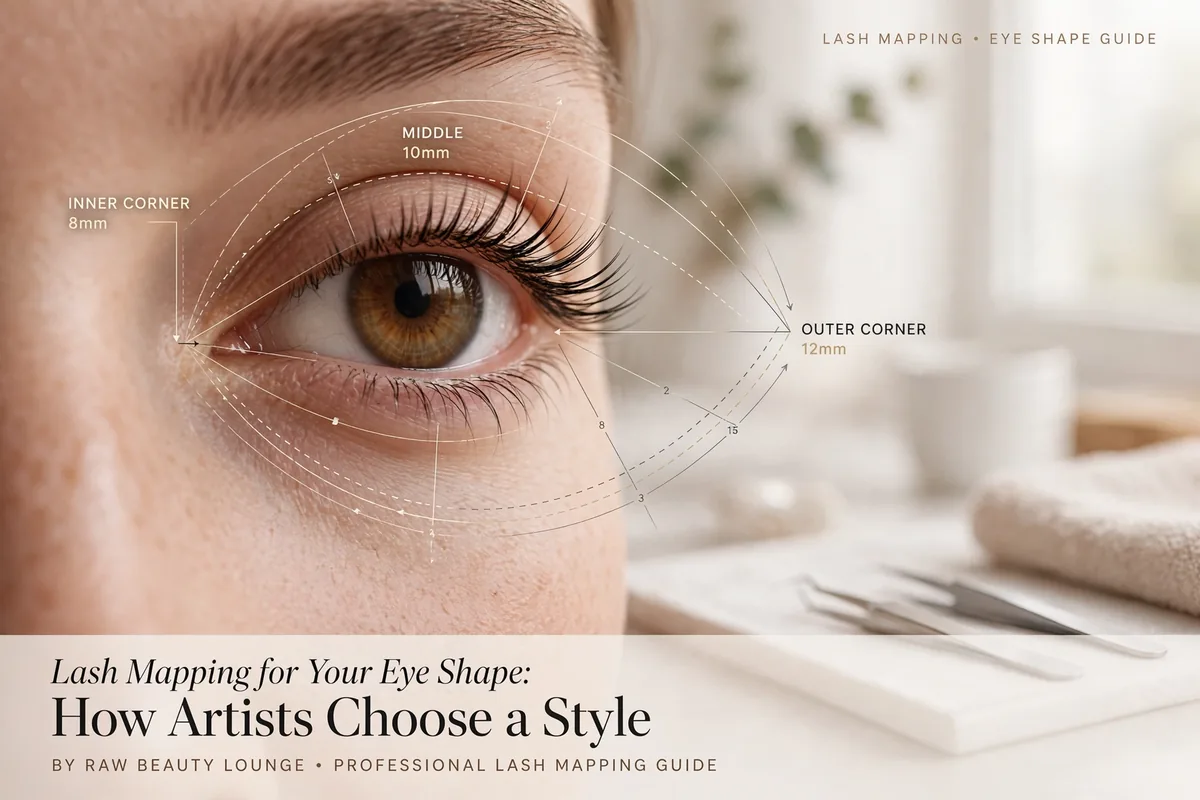
Lash mapping is the plan your artist draws before a single extension goes on. It sets the lengths, curls, and placement for every zone of your lash line. Think of it like an architect sketching a blueprint before the first brick. Without that plan, the result is guesswork.
Most lash regret starts with a skipped mapping step. One client wants drama and leaves looking droopy. Another wants natural and leaves looking startled. A map keeps your eyes and your artist on the same page.
Your eye shape changes every number in the design. Almond eyes handle balance with ease. Hooded eyes need lift so the work shows. Round eyes need length more than width.
Good artists measure in millimeters, not vibes. They mark zones with lengths like 8mm, 10mm, 12mm, and 14mm. They pick curls like C, CC, D, and L for each zone. That detail separates nice lashes from your lashes.
This guide walks you through the whole process. You will learn how artists read different eye shapes. You will see which map fits which face. The devil is in the details, and we cover every one.
A consult takes fifteen minutes and costs nothing. You leave with a sketch made for your eyes. No pressure and no booking required. Most clients say the consult sold them on the spot.
How a Trained Artist Reads Your Eye Shape
A trained artist reads your eye shape during a short consult. She studies your eyes open, relaxed, and straight ahead. She checks lid space, lash direction, and natural density. She asks about your routine, your work, and your makeup habits.
The human eye has layers that change how extensions sit and shed. Lid shape controls how much curl shows. Eye spacing controls where length should peak. Lash health controls how much weight each natural lash can carry.
You will hear simple questions that sound small. Do you sleep on your side or your back. Do you swim, run, or do hot yoga in this heat. Each answer moves a number on your map.
Then the artist sketches inner, middle, and outer zones on a chart. She notes lengths like 9mm, 11mm, and 13mm per zone. She adds curls like C, CC, and D for lift. Measure twice, cut once, because a careful map prevents a redo.
Photos help, but they never replace the in-person read. Cameras flatten depth and hide lid folds. A trained eye catches what a selfie misses. That is why the consult happens face to face.
We keep your map on file after the visit. Every fill starts from your saved design. Any artist can follow the same plan. Your set stays consistent visit after visit.
Honest artists turn away bad candidates kindly. Very sparse lashes may need a lift instead. Active eye infections mean waiting until healing. Trust an artist who says not yet.
Almond Eyes: The Balanced Canvas
Almond eyes are the balanced canvas of lash design. The lid shows a clear crease with even width and height. The outer corners tilt up just slightly. Almost every lash style flatters this shape.
Artists still map with care, because balance breaks easily. A heavy cat eye can drag the corners down. An extra-long doll eye can look startled. So why change what already works when balance is the gift?
A classic almond map starts at 9mm inside. It rises to 11mm and 12mm through the middle. It settles near 10mm on the outer edge. Curls like C and CC keep the lift soft.
Volume fans can push the middle to 13mm. Hybrid sets blend 10mm, 12mm, and 11mm for texture. Wispy spikes touch 14mm in small doses. If it ain’t broke, don’t fix it, so artists enhance rather than overhaul.
Bring photos of sets you love to your consult. Your artist will point out what fits your almond shape. She may suggest small tweaks to your reference. Trust the tweak, because she maps almond eyes every day.
Almond eyes also suit wispy texture well. Spikes of 13mm add play without bulk. Brown lashes soften the look for daytime. Ask about color options at your consult.
Round Eyes: Adding Length Without Widening
Round eyes need length without added width. The eye shows more white above and below the iris. Width already exists, so the map must stretch. Length becomes the main design tool.
Artists place the longest lengths near the outer third. A map might run 9mm inside and 13mm outside. The center holds 11mm for a smooth climb. Curls like CC and D add upward lift.
The wrong map widens the eye fast. Even lengths across the lid add sideways bulk. Strong D curl at the center opens it too wide. Less is more when the eye brings its own drama.
Kitten and cat styles suit round eyes best. They pull focus toward the temples. Softer curls like C and CC beat sharp L curls. Your artist will probly sketch the peak past the outer iris.
Round-eye clients in Tempe love this correction for photos. Wedding season pictures look longer and calmer. The design holds up in desert heat with good aftercare. Length always wins over width here.
Avoid strip-lash looks glued on as extensions. They add width where you need length. Individual mapping beats pre-made clusters here. Custom always wins for round eyes.
Omaha clients deal with wind more than heat. Wind tangles long outer corners fast. A spoolie in your bag fixes midday tangles. The map holds if you brush daily.
Hooded Eyes: Lifting What the Lid Hides
Hooded eyes hide the lid under a fold of skin. The crease sits low or vanishes when eyes open. Extensions can disappear under the hood fast. Lift is the whole game with this shape.
Artists pick stronger curls to clear the fold. Curls like D, L, and M pop lashes above the hood. Lengths stay moderate at 9mm, 11mm, and 12mm. Extra length folds back under and vanishes.
Placement matters as much as product choice. Lashes attach lower on the natural lash to angle upward. The map peaks near the center for lift. Work smarter, not harder, because curl beats length on hooded lids.
Skip heavy volume at the outer corners. Weight drags the hood lower by day three. A hybrid set with open fans stays light. And yep, most hooded-eye clients doze off once they trust the process.
Hooded eyes are common across the Valley, so we map them daily. Our artists know which curls survive monsoon humidity. They adjust adhesive speed for the season. Experience with this shape shows in week-three retention.
Waterproof makeup is the enemy of hooded sets. It demands rubbing that breaks bonds early. Switch to lash-safe formulas during week one. Your retention will show the difference.
Monolid Eyes: Building Definition That Lasts
Monolid eyes have a smooth lid with little crease. The lash line sits close to the brow bone. Extensions must create the definition the lid skips. This map rewards patience and precision.
L and M curls do the heavy lifting here. They project forward instead of curling into the lid. Lengths like 10mm, 12mm, and 13mm show clearly. Shorter inner corners near 8mm stay comfortable.
Glue choice matters when humidity spikes. Monsoon moisture can slow the cure and weaken the bond. Skilled artists adjust glue speed and isolate with extra care. Slow and steady wins the race on monolids.
The payoff is striking when the map fits. Eyes look bigger, brighter, and more defined. Retention runs strong because the design respects the lid. Clients in Chandler and Gilbert book this specialty with trained artists.
First-timers sometimes fear a heavy or fake finish. A monolid map built on L curls looks clean, not chunky. Photos from event season show open, defined eyes. Definition beats drama for everyday wear.
Kirkland clients ask about monolid mapping often. Our Washington artists train on the same maps. Humidity there differs from Arizona heat. The method adapts to both climates.
Downturned Eyes: The Gentle Lift
Downturned eyes tilt lower at the outer corners. The shape can read tired on a great day. A lash map lifts those corners with smart placement. The goal is gentle lift, not drama.
Artists shift the longest lengths toward the center. A map might peak at 12mm over the iris. Outer corners drop back to 9mm or 10mm. Curls like CC and D turn the tips upward.
Cat eye styles stay off the table here. Long outer corners pull the eye down further. Squirrel and doll maps lift the eye instead. A rising tide lifts all boats, and center length lifts the face.
First-timers love this quiet correction. The mirror shows awake eyes in seconds. Event photos look brighter without filters. Small map changes shift the whole mood.
Downturned eyes pair well with hybrid texture. Mixed fans add fullness without outer weight. Lengths like 10mm, 11mm, and 12mm keep it soft. Your artist will sketch the peak before she starts.
Mature clients love this lift especially. It opens the eye without heavy makeup. Soft brown extensions keep it natural. Age never limits a good map.
Upturned, Close-Set, and Wide-Set Eyes: Spacing Tricks
Upturned eyes and spacing quirks need placement tricks. Upturned eyes tilt higher at the outer corners. Close-set eyes sit near the nose bridge, while wide-set eyes sit farther apart. Each case asks for a different peak.
Upturned eyes balance with outer length. The map extends the corners with 12mm and 13mm. Curls stay soft with C and CC. The finish looks even instead of tilted.
Close-set eyes want the peak pushed outward. Length builds from 9mm inside to 13mm outside. The eye reads wider and more open.
Wide-set eyes flip the plan with center focus. Length peaks at 11mm or 12mm over the iris. Location, location, location decides where the longest lash lands.
Artists check spacing with a quick glance test. They compare the gap between eyes to one eye width. A smaller gap means close-set eyes. A larger gap means wide-set.
Glasses wearers should mention their frames at the consult. Long outer lengths can brush against lenses. Your artist will shorten the map where frames sit. Comfort and style share the same sketch.
Asymmetry is normal and mappable. Most faces have one eye slightly different. Artists adjust lengths per eye, not per face. Your map has a left and a right side.
Deep-Set and Prominent Eyes: Controlling Depth
Deep-set and prominent eyes sit at opposite ends of depth. Deep-set eyes rest farther back under the brow. Prominent eyes project forward from the socket. The map controls how much presence lashes add.
Deep-set eyes can handle bolder designs. Longer lengths like 12mm, 13mm, and 14mm stay balanced. Stronger curls like D and DD reach past the brow bone. The lashes frame the eye instead of hiding in shadow.
Prominent eyes need restraint to avoid a heavy stare. Shorter lengths like 8mm, 10mm, and 11mm keep proportion. Softer curls like B and C lie flatter. Keep your cards close and let the eyes lead, not the lashes.
Light changes how these maps read. Bathroom light flatters every set. Harsh sun shows every millimeter. A good consult includes a daylight check by the window.
Deep-set clients often fear lashes will disappear. The right curl brings them forward into the light. Prominent-eye clients often fear looking overdone. The right lengths keep the finish soft and wearable.
Brow shape changes the read of every map. A strong brow balances a bold lash. Threading before your lash visit sharpens the frame. We offer both services in every studio.
Lash Map Styles Explained: Natural, Doll, Kitten, Cat, Squirrel, Wispy
Lash map styles give artists a shared design language. Each style moves the longest lengths to a different zone. Natural, doll, kitten, cat, squirrel, and wispy cover most requests. Your eye shape picks the winner.
- Natural: lengths stay close, like 8mm, 10mm, and 9mm. Your lashes, but better.
- Doll: the peak hits center with 12mm or 13mm. It opens the eye wide.
- Kitten: the outer third lifts with 11mm and 12mm. Soft, flirty, wearable.
- Cat: the corners extend with 13mm and 14mm. Bold and dramatic.
- Squirrel: the peak sits between center and corner. It lifts without dragging.
- Wispy: spikes of 13mm and 14mm mix with 10mm bases. Texture for days.
The natural map suits offices and low-key routines. The doll map suits deep-set and downturned eyes. Kitten and cat maps suit round and upturned eyes. Squirrel maps rescue downturned corners with grace.
The wispy map mixes lengths for rich texture. Spikes hit 13mm and 14mm among 10mm and 11mm bases. Choosing a map is like choosing the right frame for a painting. Why squeeze every eye into the same shape when the frame should fit the art?
Different strokes for different folks, and your artist should say so. A good consult matches style to shape, not trend to face. Bring reference photos and expect honest feedback. The best style is the one built for your eyes.
Trends come and go each season. Fox eye and manga lashes trend on social feeds. Your artist will tell you if a trend fits. Shape always outranks hype in our chairs.
Classic vs Hybrid vs Volume: Which One Fits Your Map
Classic, hybrid, and volume describe attachment, not map shape. Classic places one extension on one natural lash. Hybrid mixes singles with light fans. Volume builds fans of three to six fine extensions per lash.
Classic suits strong natural lashes and first-timers. It costs less and feels light on the lid. Full sets start at $99 in our studios. The look stays clean and office-friendly.
Hybrid adds texture for sparse lash lines. It blends 1:1 lashes with soft 3D fans. Full sets run $140. It fills gaps without full drama.
Volume creates the fullest finish of the three. Fans of 3D, 4D, 5D, and 6D add density. Full sets run $150. It suits events, photos, and bold everyday wear.
Your map and your method work as a team. A doll map in classic looks soft and open. The same map in volume looks bold and bright. Read our guide to different types of eyelash extensions before you decide.
You get what you pay for with lash work. The right method protects your natural lashes. The wrong method strains them for a look that fades fast. A consult matches method to lash health first.
Lash lifts are another option for low upkeep. They curl your natural lashes for weeks. No extensions and no fills needed. Ask if your lashes qualify.
Ready to see what your eyes can do with a real map. New clients get a welcome discount on their first full set. Booking takes two minutes online, and you pick the time that fits your week. Book your appointment today and bring your reference photos.
What Makes Lash Extensions Fall Out Quickly
Lashes fall out fast when the map, bond, or aftercare fails. A good set lasts two to four weeks between fills. Early shedding points to a clear cause. Here are the usual suspects in the Valley.
Poor isolation tops the list of culprits. Lashes stuck together pull each other out daily. Heavy fans strain fine lashes, and oil breaks the bond. Desert heat and sweat soften fresh glue fast.
Monsoon humidity swings make curing tricky. Steam from showers and saunas loosens fresh bonds. Rubbing your eyes breaks the seal lash by lash. Sleeping face-down crushes and twists the extensions.
The first 24 to 48 hours decide everything. Adhesive needs that full window to cure. Water and sweat during the cure spell early loss. Clients often ask how long do eyelash extensions last in Arizona heat.
An ounce of prevention is worth a pound of cure. Guard those first two days closely. Your fills will thank you later.
Cheap adhesive fails faster in our climate. Quality glue costs more but holds through heat. Rushed artists skip the dry time each lash needs. Ask what brand your studio uses and why.
Crying happens, and one cry will not ruin a set. Salt water weakens bonds only with repeat exposure. Rinse gently after tears and pat dry. Do not rub, even when emotions run high.
Swimming pools add chlorine to the mix. Chlorine dries adhesive and fades dark lashes. Wear goggles or rinse right after swimming. Lake days in Omaha need the same care.
Aftercare That Protects Your Map
Aftercare protects your map long after you leave the studio. Clean lashes outlast dirty ones every time. A simple routine beats an expensive rescue. These habits keep every zone of the map intact.
- Wash daily with an oil-free lash cleanser and lukewarm water.
- Pat dry with a soft towel, never rub the lash line.
- Brush each morning with a clean spoolie to keep fans open.
- Skip oil-based makeup, waterproof mascara, and heavy eyeliner.
Sleep on your back when you can. A silk pillowcase helps side sleepers protect their sets. Book fills every two to three weeks. Consistency keeps the map sharp and full.
These small habits make your eyelash extensions last longer between fills. Treat the eye area gently and keep products oil-free. A stitch in time saves nine. A clean lash line saves your fill.
Phoenix summers test every set we place. Pool days and patio nights add sweat and sunscreen. Rinse lashes after swimming and pat them dry. Your map survives summer with a little teamwork.
Your artist will hand you a spoolie at checkout. Keep one in your bag for midday touch-ups. A quick brush keeps fans fluffy and separated. Small tools protect a big investment.
What Lash Mapping Costs in the Phoenix Metro
Lash mapping costs nothing extra at a studio that does it right. The consult and the map come with every full set. You pay for the set, not the sketch. Fair pricing means no surprises at checkout.
Our full sets start at $99 for classic. Hybrid sets run $140 and volume runs $150. Fills come as regular, mini, or extended. First visits from another salon usually need an extended fill.
Beware prices that seem too low to be real. Cheap sets often skip the consult and the map. You pay twice when a bad set needs a fix. Honesty is the best policy, so we list every price before you book.
New-client discounts make the first visit easier. Online booking shows your price before you confirm. No hidden fees wait at the register. What you see is what you pay in Tempe, Gilbert, Glendale, and Chandler.
Kirkland and Omaha studios follow the same price menu. Six locations, one honest standard. Payment plans are available if you want to split the cost. Ask our front desk and we will walk you through it.
Membership options can lower the per-visit cost. Ask about plans if you fill on schedule. Regulars save the most over a year. The front desk will run the numbers with you.
Event season in the Valley runs fall through spring. Brides should book trials six weeks out. Trials let us perfect the map before the day. Wedding parties can book back-to-back chairs.
Red Flags: Signs Your Lash Map Is Wrong for You
A wrong lash map shows itself within days. Lashes twist, poke, or shed in clumps. Your eyes itch, water, or feel heavy. Trust those signals and speak up fast.
Watch for one length across the whole lid. That is not a map, it is a shortcut. Watch for clusters glued to skin instead of lash. None of these are normal for a pro set.
Hygiene red flags matter even more. Tools should come from sealed pouches or a sterilizer. The artist should wash her hands where you can see. The FDA guidance on eye cosmetics explains why the eye area needs extra care.
If it sounds too good to be true, it probably is. A $40 full set cannot cover safe products and real time. Ask about the map before you book anywhere. A real artist lights up explaining her plan.
Photos online can hide a bad map well. Filters smooth clumps and mask poor isolation. Ask to see unfiltered close-ups of healed sets. Honest portfolios show week-two and week-three results.
A rushed full set is another warning sign. Quality sets need ninety minutes or more. Forty-five minute full sets cut real corners. Time is an ingredient, not a bonus.
Why Raw Beauty Lounge Maps Differently
Raw Beauty Lounge maps differently because mapping starts every appointment. Our artists study eye shapes before they touch tweezers. The consult is never rushed and never skipped. That standard holds across all six studios.
The numbers back up the method. We bring 9+ years of experience to every lash line. We have earned 24+ awards, including Best Lash Extensions. More than 31,200 happy clients trust our chairs, which tops a packed sports arena.
Hygiene is non-negotiable in our studios. Tools are sterilized and stations reset between clients. Our artists hold certifications and train at our lash academy. Browse our lash services to see every set and fill.
The proof is in the pudding, as our regulars say. Fills from other salons are welcome here. We fix rushed maps and rebuild them correctly. Walk in unsure and walk out with a plan.
Six studios mean a skilled artist stays close by. Tempe, Chandler, Gilbert, and Glendale cover the Valley. Kirkland serves the Eastside and Omaha serves eastern Nebraska. One booking system ties them all together.
Our lash academy trains the next wave of artists. Students learn mapping before they learn speed. Many of our artists started in those seats. Education keeps our standards high across six studios.
Lash Mapping FAQs
Every consult ends with questions, and we love that. There is no such thing as a dumb question near your eyes. Here are the ones we hear most.
Does lash mapping hurt?
Lash mapping does not hurt at all. The artist looks, measures, and sketches while you relax. Your eyes stay open for the consult. They stay closed during the application.
How long does the appointment take?
A full set with mapping takes about two hours. The consult adds ten to fifteen minutes up front. Fills take sixty to ninety minutes. Bring a podcast and enjoy the break.
Can I switch lash styles later?
You can switch styles at any fill visit. Your artist redraws the map for the new shape. Some switches need a fresh full set. Ask at your fill and we will plan it together.
Will extensions damage my natural lashes?
Extensions do not harm healthy lashes when applied right. Correct weight and clean isolation protect each natural lash. Damage comes from heavy fans and rushed technique. A real map matches weight to what your lashes can carry.
How often do I need fills?
Most clients book fills every two to three weeks. Natural shedding removes a few lashes per eye daily. Fills replace what shed and keep the map sharp. Wait four weeks and you likely need a full set.
What if I have allergies or sensitive eyes?
Tell your artist about every allergy at the consult. We offer a patch test before your first full set. Sensitive eyes often do well with gentler adhesives. Your safety shapes the map as much as your eye shape.
Do you fix lash work from other salons?
We fix other salons’ work every week. Book an extended fill for your first visit. We remove problem lashes and rebuild the map correctly. No judgment here, only better lashes.
The Right Map Makes All the Difference
The right lash map turns a good set into your set. It respects your eye shape, your lashes, and your life. It lasts longer, feels lighter, and photographs better. That is the difference a real plan makes.
You now know what artists look for and what to ask. You know the styles, the methods, and the aftercare. You know the red flags and the fair prices. Strike while the iron is hot, because event season books fast in the Valley.
New clients get a welcome discount on their first full set. Online booking takes two minutes and shows your price up front. Pick Tempe, Gilbert, Glendale, Chandler, Kirkland, or Omaha. Book your appointment today and let a real map do the work.


